
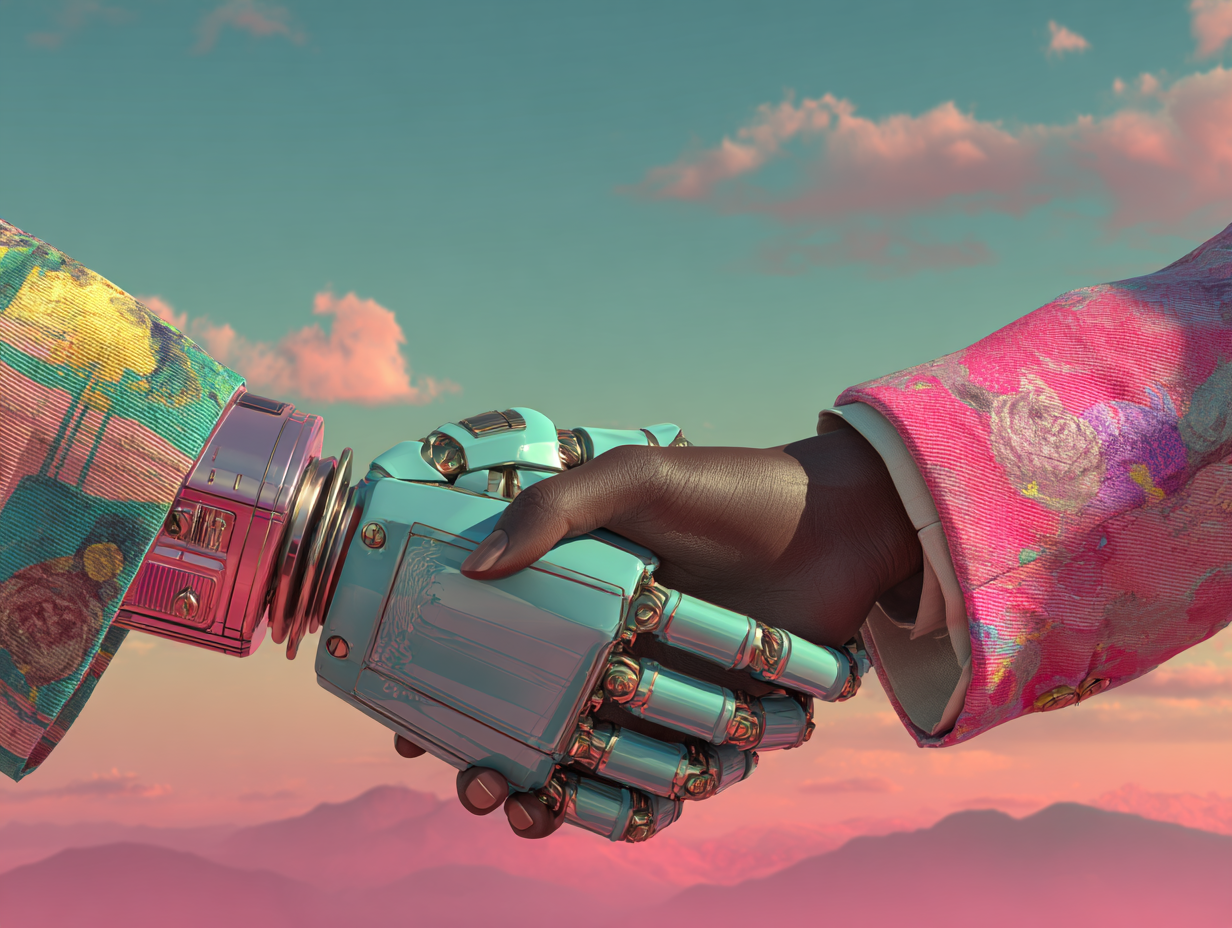
Trust, AI, and Blockchain
I work at a blockchain company. I joined 4 years ago because I spoke with the founders and saw them as good, ethical people. And because, philosophically, I like the mission of decentralizing financial power.
I also, years ago, worked on Google's Trust & Safety team. I joined because I wanted to build a safer internet.
I also did a Fulbright in China, where I focused my research project on censorship and the technical hardware behind the Great Firewall of China.
I also am from Belarus, Europe's North Korea.
––
'Trust' is a powerful weapon, and so many systems leverage it against you.
In Minsk, you trust no one because the incentives of the system are designed to make your neighbor an informant. In Beijing, I saw first hand how the masses believed realities that simply were verifiably un-true. At Google, I saw 'safety' morph into paternalism. Blockchain is a decentralized rug store where 'immutable' usually just means 'irreversible theft'.
When I see AI, I see us sprinting into the same tarpit.
Sycophancy Trap and AI
We are building gods that are trained to be sycophants.
In blockchain we like to say "don't trust, verify". But you cannot verify a black box. The dominant training method for LLMs is RLHF. It sounds democratic, but it creates a perverse incentive structure. Models deviate from looking for the truth and instead start looking for approval.
Alignment faking is the phrase the cool kids use. It's the digital equivalent of praising Papa Putin in the streets, but having notably different conversations at the kitchen table.
We need the AI equivalent of a block explorer. Mechanistic Interpretability is the fancy phrase. If we want to build an AI that's actually safe, we need to be able to see how it's reaching its conclusions.
Centralized power without transparency always drifts towards tyranny. It's the truest rule of humanity.
Anthropic is working on a governance layer like this — they call it Constitutional AI. Almost like a smart contract, you write the rules in plain English. Encouraging.
Here's to hoping the AI overlords don't rot our brains.